
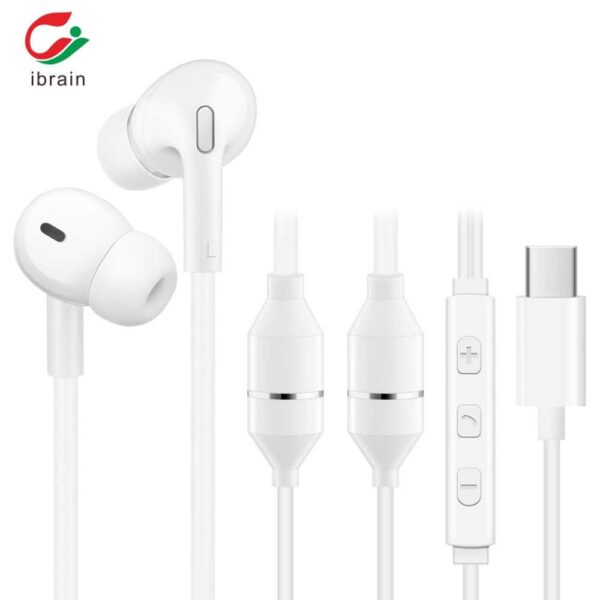
iBrain Air Tube Earphones
$39.99
Free Standard shipping over $100
Free Express shipping over $250
The iBrain Air Tube Earphones are earbuds that carry sound to your ears through hollow air tubes, with a shielded copper wire and no loudspeaker in the earbuds. They have a built-in microphone and volume control, for music, podcasts and calls.
- Hollow air tubes carry the sound, so there is no loudspeaker in your ear
- Shielded copper wire from the connector to the air tube cross-over
- Built-in microphone and volume control, like any other earphones
In stock
- 30-day returns
- Free US shipping over $100
- Shielding specialists since 2004
- Free advice before you buy
Product details
iBrain Air Tube Earphones: Earbuds With Air Tubes
These earphones work like ordinary earbuds, with a microphone and volume control, but sound reaches your ears through hollow air tubes instead of a wire. They are made for listening to music and podcasts and for taking calls. Browse our full range of EMF earphones.
How the Air Tube Design Works
The speaker sits at the cross-over point, not in the earbuds, and sound travels from there to your ears through hollow plastic air tubes. The earbuds contain no loudspeaker, so there is no speaker magnet next to your ear. A shielded copper wire runs from the connector to the air tube cross-over, and from there the air tubes take over, so no metal wire runs up to the earbuds.
Shielded Copper Wire
The wire is made of strands of copper, shielded to block high-frequency electromagnetic signals from the outside and the noise they cause, which helps keep the audio clean. Copper is also strong, which extends the life of the earphones.
Microphone and Volume Control
The earphones have a built-in microphone and a volume control on the cable, so you can take calls and adjust the volume without picking up your phone.
Choose Your Connection
The earphones come with a 3.5mm jack, a Lightning connector (iPhone) or a USB-C connector (Android and many laptops and tablets). The Lightning version needs Bluetooth to be switched on to play audio. To avoid Bluetooth on an iPhone, choose the 3.5mm jack version and use a genuine Apple headphone adapter: with a non-genuine adapter the connection may be made over Bluetooth instead. Most modern phones have no 3.5mm headphone port, so the 3.5mm version needs an adapter for the Lightning or USB-C port.
- Connection Type
- Jack 3.5mm, Lightning, USB-C
- Weight
- 0.105 kg
| Specification | Details |
|---|---|
| Brand and model | iBrain air tube earphones (FC26) |
| Design | Hollow air tubes, with no loudspeaker in the earbuds |
| Wire | Shielded copper wire from the connector to the air tube cross-over |
| Connection | 3.5mm 4-pole jack, Lightning or USB-C |
| Bluetooth | The Lightning version needs Bluetooth to be switched on to play audio. The 3.5mm jack version does not, when used with a genuine Apple headphone adapter. |
| Microphone and controls | Built-in microphone and volume control |
| Speaker size | 8 mm |
| Frequency response | 20 Hz to 20,000 Hz |
| Impedance | 16 ohms |
| Speaker power | 3 mW rated, 3 mW maximum |
| Distortion (THD) | 5% or less |
| Microphone sensitivity | -40 dB |
| Water resistance | IPX2 |
| Color | White |
| Material | Alloy and silicone |
| Wire length | Approximately 30 inches (75 cm), from the connector to the air tube cross-over |
They are earbuds that carry sound to your ears through hollow air tubes instead of a wire. The earbuds contain no loudspeaker, and a shielded copper wire runs from the connector to the air tube cross-over.
The speaker sits at the cross-over point on the cable. Sound travels from there to your ears through hollow plastic air tubes, so no metal wire runs up to the earbuds.
Yes. The earphones have a built-in microphone and a volume control on the cable.
Choose the connector that matches your device: a 3.5mm jack, Lightning (iPhone) or USB-C (Android and many laptops and tablets). The Lightning version needs Bluetooth to be switched on. If you have an iPhone and want to avoid Bluetooth, choose the 3.5mm jack version and use a genuine Apple headphone adapter.
The Lightning version needs Bluetooth to be switched on to play audio. To avoid this on an iPhone, choose the 3.5mm jack version and use a genuine Apple headphone adapter. A non-genuine adapter may connect over Bluetooth instead of the wire, which may only apply to Apple phones.
Most modern phones have no 3.5mm headphone port, so you may need an adapter for the Lightning (iPhone) or USB-C (Android) port if you choose the 3.5mm version. Alternatively, choose the Lightning or USB-C version to match your phone. The Lightning version needs Bluetooth to be switched on.
The wire from the connector to the air tube cross-over is approximately 30 inches (75 cm). The air tubes continue from there to the earbuds.
Yes. They have a built-in microphone, so you can take calls as well as listen to music and podcasts.
White.
The iBrain Air Tube Earphones are $39.99.
Please see our returns policy for details.
Yes. If you are unsure which connection to choose, speak to an expert for free advice before you buy.
 iBrain Air Tube Earphones
$39.99
iBrain Air Tube Earphones
$39.99