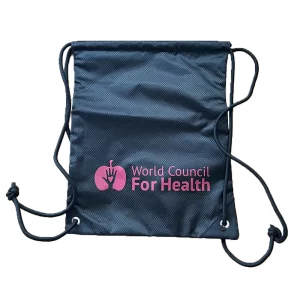
A Faraday bag is a portable Faraday cage: conductive fabric sewn into an everyday bag, blocking the wireless signals that connect your phone, key fob and cards to the world. Slip electronics into the shielded compartment and RFID skimming, GPS tracking and Bluetooth connections stop cold; phone signal drops to little or nothing, though right next to a strong signal source, a trace can occasionally get through. The range keeps it simple: the Faraday EMF RFID Shielding Backpack and the Shielding Tote Bag, each $40, each independently tested to block RFID, WiFi, GPS and Bluetooth frequencies, and each built for everyday use rather than the spy movie shelf.
Yes. Our bags are independently tested to block RFID, WiFi, GPS and Bluetooth signals, and a properly sealed pouch cuts phone signal down to a fraction of what it was outside the bag — usually enough that a call goes straight to voicemail. The physics is the Faraday cage: conductive material spreads an incoming field around the outside of the enclosure, so far less makes it through to the inside. No shielding is perfect, though — very close to a strong signal source, a trace can still leak in, and a phone hunting for that faint signal will briefly boost its transmit power trying to connect, the same way it does in a lift or basement with poor reception. That’s exactly why the bag’s job isn’t a guaranteed zero — it’s a dramatic, consistent cut to how much signal reaches your phone and how much it transmits back. You can test it yourself in ten seconds: seal your phone in the bag, call it from another phone, and see how it behaves.
Yes. Both the backpack and tote are sized for real electronic devices: laptops, tablets, phone, wallet and key fob together, with room left over. The shielded compartment does the blocking, so anything inside has its signal cut down sharply while ordinary pockets carry whatever you want reachable. One practical warning: a phone sealed in a Faraday bag will drop to little or no signal and won’t reliably receive calls or messages, which is the entire point, so keep it in a normal pocket when you are expecting one.
An EMF blocking bag with a conductive layer, usually metalized fabric or fine wire mesh, built into its structure. When wireless radio frequency (RF) signals hit that outer layer, the charge redistributes around the conductive surface and sharply cuts the field that reaches the inside, across a wide band of frequencies — similar to how the metal shell of a microwave keeps most of the energy in. The technology scales: signal blocking pouches work the same way at pocket size, and a full Faraday bag simply scales the pouch up to carry a laptop. A magnet does nothing here, by the way; shielding is conductivity, not magnetism. And do not confuse it with a waterproof dry bag, which keeps water out, not signal. The seal matters more than anything: fold-over closures and velcro exist to keep the conductive path unbroken at the opening.
Car theft. Modern relay attacks capture the signal your key fob broadcasts and replay it to unlock and start the car while the key sits in your hallway, and the whole theft takes under a minute without a person ever touching your key. A Faraday bag or shielded compartment blocks the fob’s low-power signal almost completely, so there is nothing for the thieves’ amplifier to catch. If your car has keyless entry, this is one of the cheapest pieces of car security you will ever buy: park, drop the key fob in the bag, done.
They protect what’s inside them from incoming signals, and they cut down how much your devices transmit — but it’s worth being precise about the mechanism. Put a phone in the bag, and rather than switching off, it keeps trying to find a signal: with barely anything getting through, it can boost its transmit power in short bursts while searching for a tower, the same behavior you’d see in a lift or basement. What actually drops is your overall exposure — far fewer successful connections, far less time spent transmitting, and a phone working from inside a heavily attenuated space rather than broadcasting freely next to your body. What a bag does not do is shield your body from external sources; for that kind of protection you want clothing, canopies or paint. Bags manage your electronics, and honest sellers keep that distinction clear.
Partially, briefly, annoyingly. A few tight layers of foil can block signal, and a biscuit tin with a well-fitting lid actually makes a passable improvised cage, which is why the question keeps coming up. The practical problems are durability and the seal: foil tears the third time you use it, gaps leak signal, and neither survives a commute. A purpose-made bag gives you tested materials, a proper seal, and a lifetime of daily use, all at a $40 price. Foil is a fun physics experiment; it is not gear.
Both use the same shielding fabric and the same $40 price, identical value, so it is purely about how you prefer carrying your gear. The backpack suits commuters and travel, with the shielded compartment holding a laptop, and spreads weight across both shoulders. The tote works for the office, the school run and shopping, with faster access on the move. Either way the blocking performance is identical, both are solid and durable enough for daily service, and fast delivery and 30-day returns cover you if the style does not fit your life.
To a useful degree, yes. EMP protection is a scaled-up version of the same shielding technology: a strong electromagnetic pulse induces damaging electrical currents in electronics, and a sealed conductive enclosure sharply reduces what reaches the devices inside. Dedicated EMP-rated products use heavier materials and certified seam construction, so treat an everyday Faraday bag as sensible protection for your electronics rather than a certified bunker. For keys, cards, phones and data privacy, which is what most people actually need, the bags here are the practical, tested answer.
Test on day one: phone in, seal it, call it, then check RFID cards read as dead and WiFi and Bluetooth do not reconnect. Repeat the test every few months, because the conductive fabric is the critical component and repeat tests confirm the effectiveness. A trace of phone signal getting through right next to a strong tower isn’t a sign of failure — RFID, GPS and Bluetooth blocking staying solid is the more reliable check. Care is simple: keep the seal area clean and secure, do not machine wash the shielding compartment, and spot clean the outer fabric.